
I Started Marvin Builds to Document Real AI-Agent Workflows
AI-agent demos are everywhere now. The part I care about is harder:
Can an agent workflow be repeated, verified, and still controlled by a human builder?
That is why I started a YouTube channel called Marvin Builds.

Marvin Builds is where I turn AI-agent experiments into visible build logs: real tasks, real mistakes, real verification, and workflows I can reuse instead of one-off prompts that only worked once.
What I Want to Show
The channel is about what happens between the prompt and the result:
- how an agent reads requirements
- how it changes existing files
- where it makes wrong assumptions
- how I debug and review the work
- what I verify before trusting the output
That messy middle is usually the useful part. It shows whether an AI agent is only producing a demo, or whether it can fit into a workflow a builder can actually control.
Examples
These are the kinds of episodes I want the channel to make easier to understand.
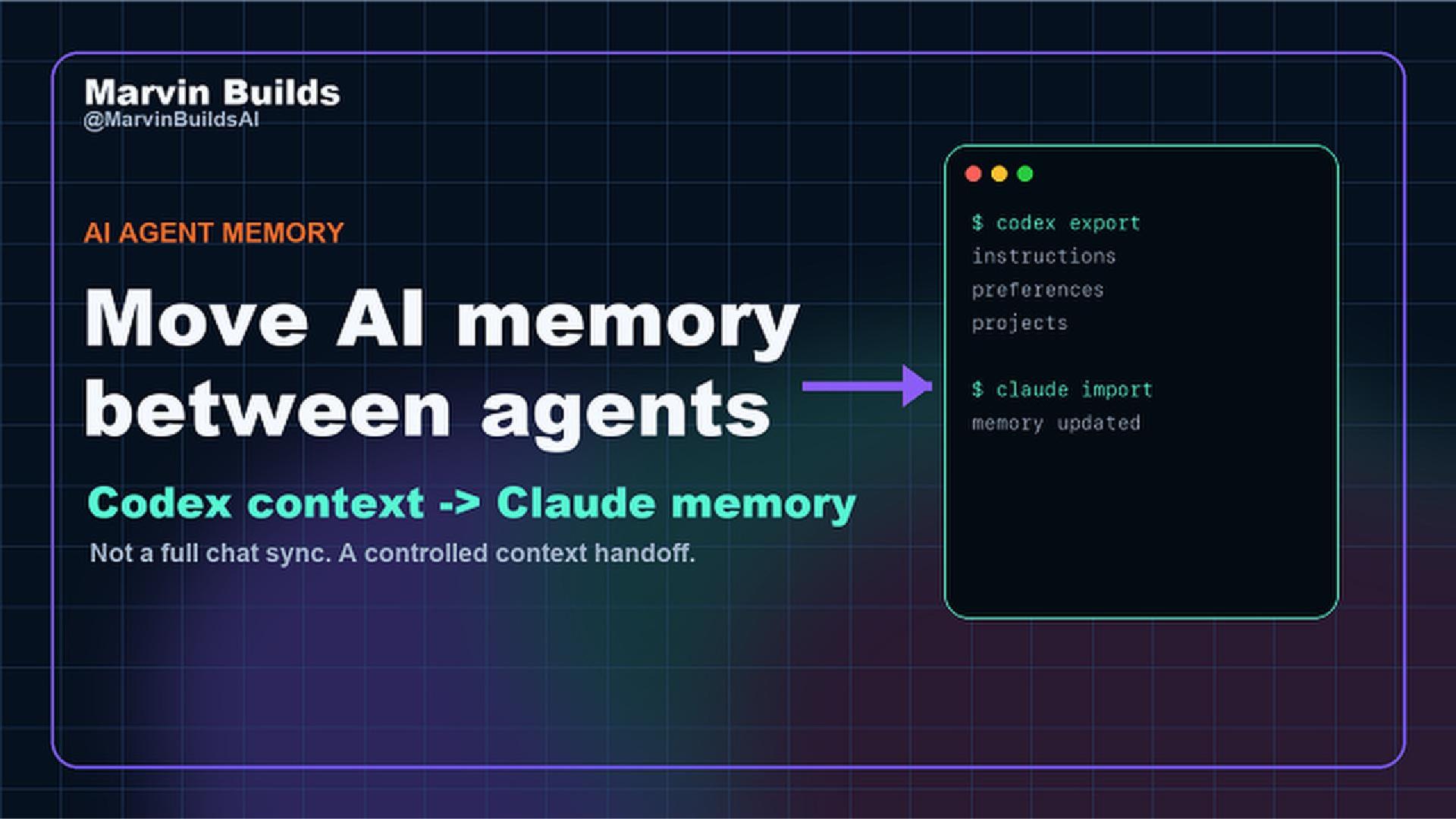
Move AI Memory Between Agents
A controlled context handoff from Codex to Claude: extract useful memory, review what should move forward, import it, then verify what the receiving agent learned.
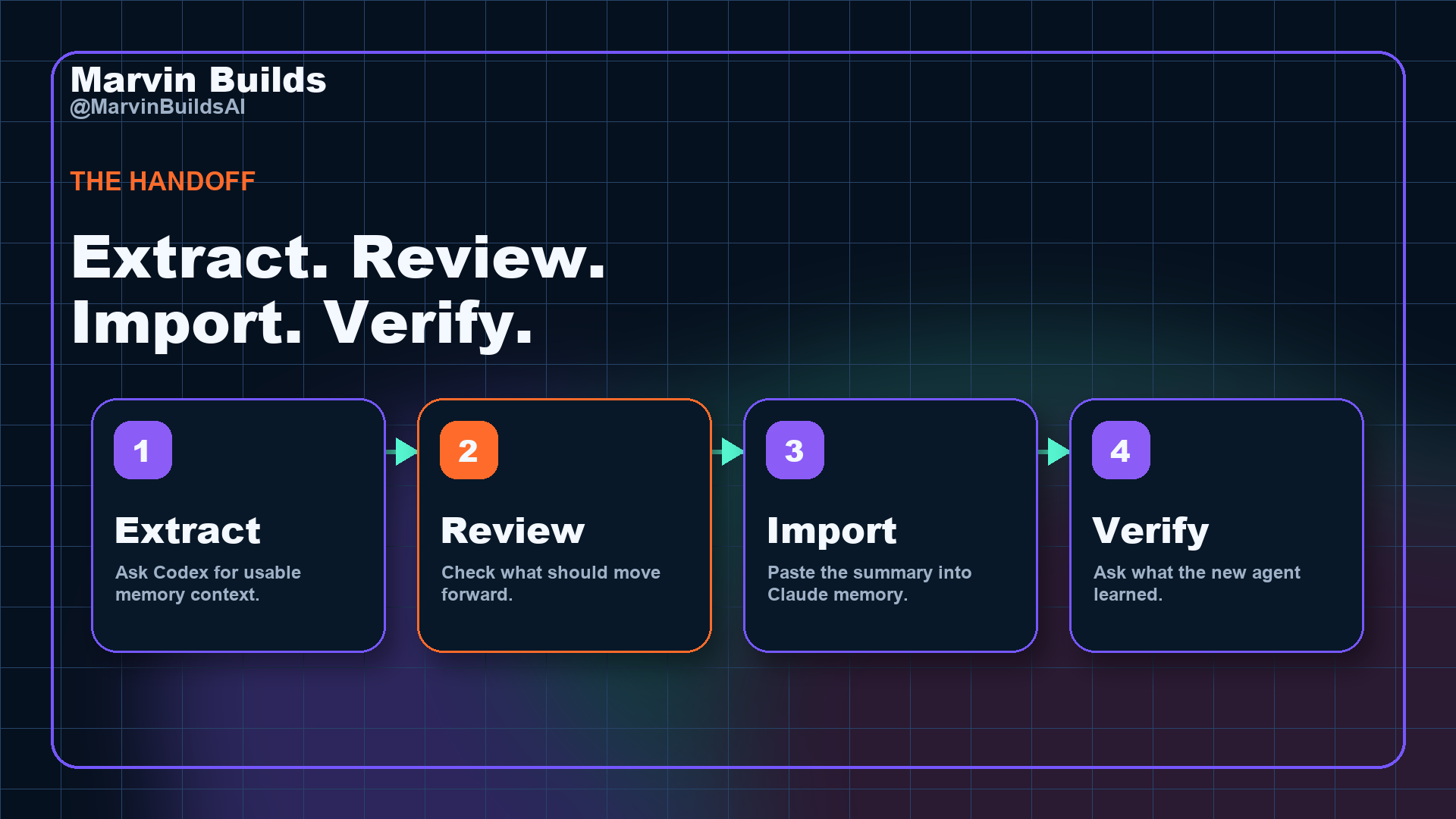
Key frame: the useful pattern is not blind sync. It is extract, review, import, verify.
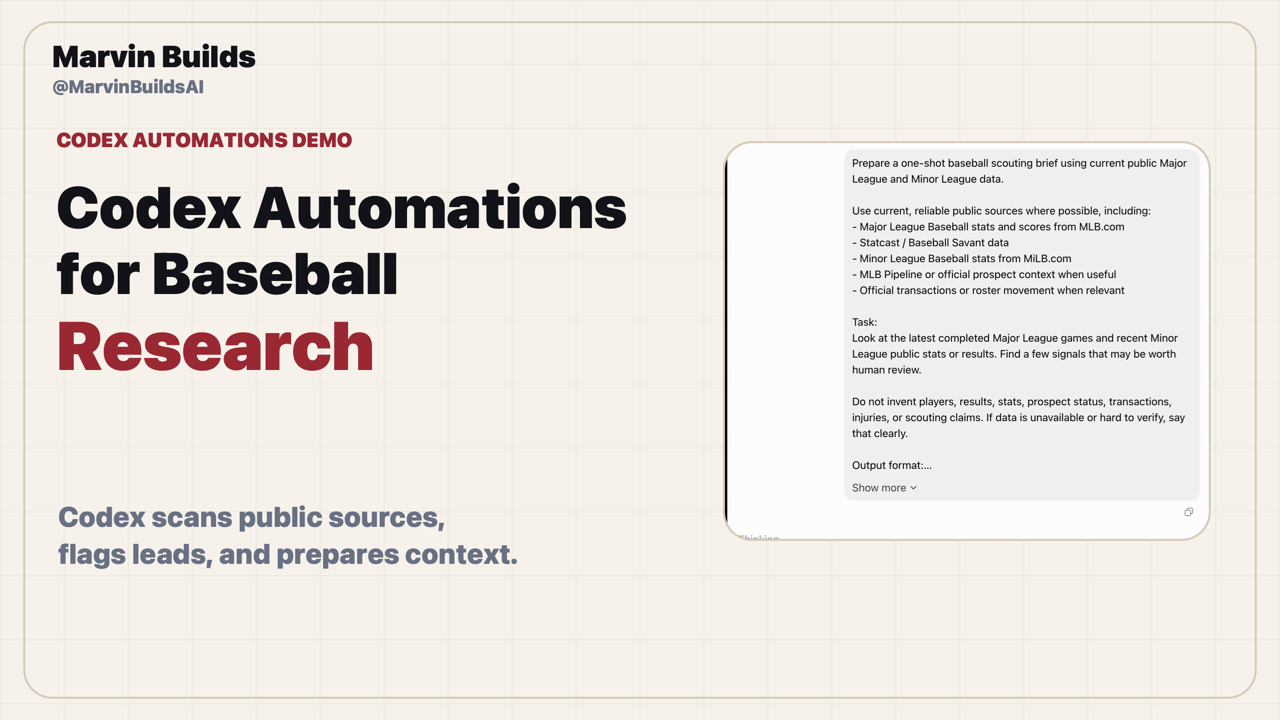
Codex Automations for Baseball Research
A recurring research workflow using baseball as the example: scan public sources, surface candidate signals, explain uncertainty, and leave the final call to human review.
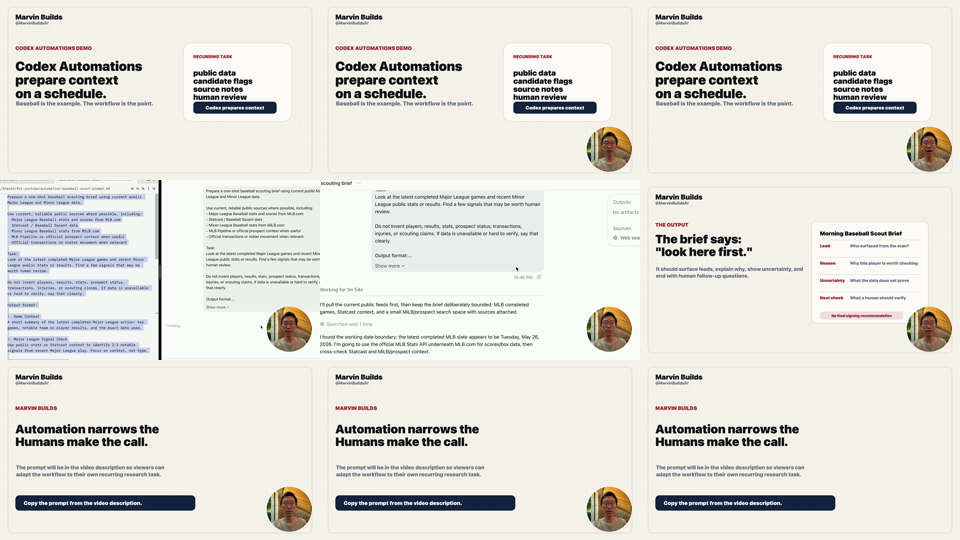
Key frame: the agent prepares context and questions; the human still makes the judgment.
This blog will still be where I write notes and decisions. Marvin Builds is where I show the workflow in motion.